
SCHEDULE DETAILS Information of Event Schedules
World is committed to making participation in the event a harassment free experience for everyone, regardless of level of experience, gender, gender identity and expression
Megnyitó

Molnár Dániel
Questionnaire, Game, Risk: How Does a Producer Assess What a Publisher Is Taking On?

A good pitch can spark a publisher’s interest, but how do you determine what it will actually take to develop and successfully launch the game? This talk explores the Publishing Production Due Diligence process from a producer’s perspective: what questions a publisher asks the development team, how it identifies the project’s support needs, costs and risks, and how all of this feeds into an informed business decision. We’ll also look at how a publisher can provide genuine value beyond financing.

Kozák Tamás
Funding Your Game Idea (Specifically for Indie Developers!)
Tőkeszerzés indie módra: hogyan győzd meg a finanszírozókat a játékodról? Az előadás kifejezetten a független fejlesztők kihívásaira fókuszálva mutatja be a sikeres pitch elengedhetetlen elemeit – és azokat a végzetes hibákat, amiket mindenképp el kell kerülnöd a prezentáció során.

Sándor Olivér
Between Hype and Denial – AI in the Everyday Life of a Development Team

The current challenges of the mobile gaming market—from declining user numbers to skyrocketing acquisition costs—are forcing every studio to seek new solutions. But is artificial intelligence the ultimate answer, or just an overhyped silver bullet? In this honest, behind-the-scenes case study, we share the real-world experiences of the Merge Gardens development team. We'll explore the internal tensions where creative freedom, business goals, and player expectations clashed, as well as the successful and failed AI experiments and real feedback from players. An insightful presentation on how AI is reshaping the future of a live mobile game, team structure, and recruitment in the long run.

Urbán Norbert
How to Design an (A)RPG Progression System: Mistakes to Avoid and Ideas to Consider
When designing complex (A)RPG systems, it is easy to fall into the trap of "systems built on systems"—where new features only add complexity without true depth. But how do you build a progression model that keeps players engaged for the long haul? Through practical experiences, this talk walks through the full lifecycle of character progression: from calculating effective power curves and stat balances, to building internal simulators and tools, all the way to post-launch data analysis. An essential guide for anyone looking to avoid common design pitfalls and build a predictable, tunable progression system.
Lunch Break

Nagy Róbert
Poligon raszterizálás
A modern videójátékok látványvilága mögött a poligon raszterizálás komplex és precíz folyamata áll, amely az évtizedek során a szoftveres rendereléstől a célszerszámként működő GPU-kig fejlődött. Ez az előadás a 3D-s grafika alapjai mögé enged betekintést: végigkövetjük a renderelési csővezeték (pipeline) állomásait a hardveres és szoftveres környezet kölcsönhatásában. Szó lesz a legfontosabb algoritmusokról, a mögöttük rejlő matematikai és fizikai számításokról, valamint azokról a kritikus optimalizációs eljárásokról, amelyek lehetővé teszik a valós idejű, magas képkockaszámú megjelenítést. Nélkülözhetetlen mélyfúrás minden fejlesztőnek, akit érdekel a képernyőn megjelenő pixelek mögötti reális mérnöki munka.
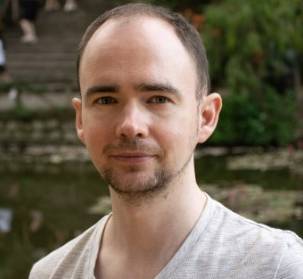
Valasek Gábor
Shaderoptimalizálás a fordító után: AMD és NVIDIA ISA assembly a gyakorlatban
This talk explores how modern GPUs actually execute carefully written shader code. We will examine AMD RDNA architectures, which also form the basis of the current console generation (PS5 and Xbox Series X), as well as NVIDIA’s Ampere architecture, currently one of the most widely used GPU architectures in PC gaming. We will look at the key similarities between these hardware architectures and the different design choices they make, before using low-level, so-called ISA assembly to trace how operations in high-level shader languages are translated into the elementary instructions actually executed by the GPU. The aim of the talk is not to teach assembly programming, but to develop a more accurate mental model of what happens between shader source code and the programme running on the hardware: how vectorisation, instruction selection, register usage, memory access, parallel execution and control-flow divergence manifest at the hardware level. This perspective can help identify performance issues that may not be apparent from the source code alone, and explain why the same shader can behave differently on AMD and NVIDIA hardware. Finally, we will explore how this knowledge can be applied to AI-assisted programming: how to verify the real cost of generated code, how to give code-generation tools more precise optimisation constraints, and how to distinguish changes that merely look convincing from those that deliver measurable performance improvements.
Ebéd szünet